
This is an illustrative composite. It describes no client and uses nothing from a client’s record.
The finance manager has been there eleven years. On a Tuesday afternoon she tells the managing partner she has accepted another job. She will work her notice. She is gracious about it, and she means it.
The managing partner says the right things. Then he goes back to his desk and realises he has no idea what she actually does.
He knows her job title and roughly what the role covers. What he doesn’t know is the part that never made it into the job description. Which supplier needs paying on the 25th rather than the 30th, or they put the account on hold. Which one quietly gives a better rate if you ask in March. Which of the firm’s bank contacts she phones directly when a payment sticks, and what she says.
A handover asks her to remember everything at once
The usual answer is a handover document. She will write one in her last fortnight, alongside her actual job, while mentally halfway out of the door. It will be conscientious and it will be incomplete, because nobody can list what they know when the knowing is mostly habit.
Her replacement will find the gaps one at a time, usually when something breaks.
The question he can ask instead
Which of our supplier relationships depend on her alone, and who else has been involved in each?
With a company brain, that question has an answer the same afternoon. The firm’s email, meeting notes, finance system and supplier records are already on one governed record, so the brain can show which relationships run through her, how often, and who else has been copied, met or paid them.
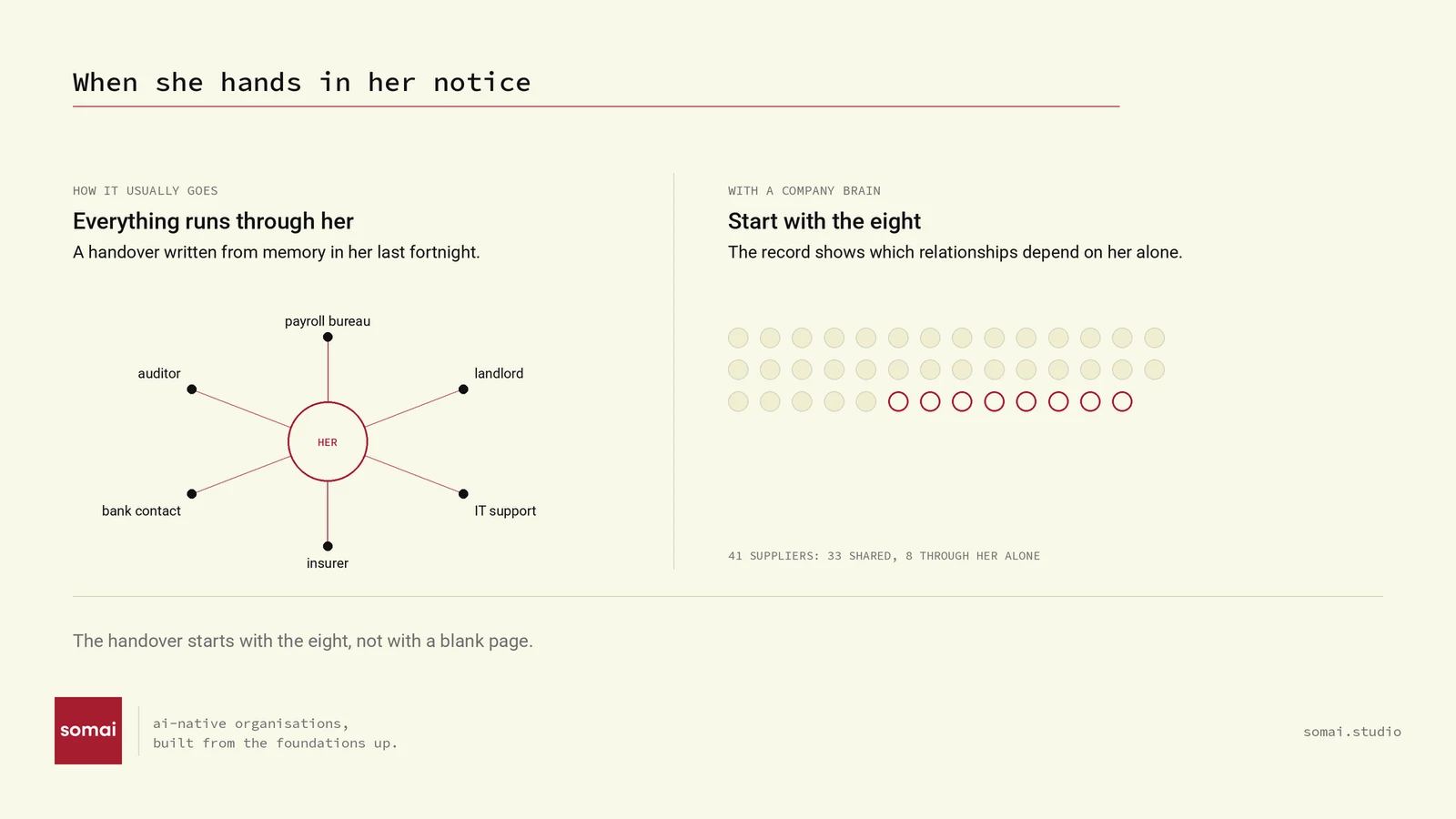
Forty-one suppliers in the last year. For thirty-three of them, someone else in the team has handled at least part of the relationship. Eight run through her and nobody else. Three of those eight have payment arrangements that aren’t written down anywhere except in her emails.
The handover starts with the eight, not with a blank page.
Her notice period becomes four weeks of the right conversations
Now the handover has a shape. She spends her four weeks on the eight relationships nobody else knows, introducing her colleague to each one and confirming the arrangements on the record as she goes. The thirty-three that someone already shares get a short check, not a long document.
She doesn’t need to remember everything at once. The record already holds most of what she did. She only has to fill in what it can’t see, and the brain can tell her where that is.
It is the same question at any time
Nothing about this needs a resignation. The managing partner could ask the same question about any of his people on any Tuesday: which parts of the business depend on one person, and who could cover them?
Most firms only ask it when someone is leaving, which is exactly when the answer is hardest to get. Asked earlier, it is a planning question. Asked during a notice period, it is damage control.
Who in your business would you least like to see resign, and could you say today what only they know?
See the key-person risk use case.